ABOUT CATECHUMENS

ABOUT CATECHUMENS

22.01.2023


Before the Cherubic Hymn, a priest or a deacon exclaims three prayers for the catechumens. The first one sounds like, “Catechumens, depart. As many as are catechumens, depart.” 

In ancient times, those people who prepared themselves for the Sacrament of Holy Baptism and who were not yet the members of the Church through the Baptism, were called catechumens, or those who prepared to enter the Church. According to Tradition, they remained in church only up to the Cherubic Hymn, before this most mysterious moment of the Holy Liturgy, when the mystery of consecration of the Holy Elements and the Eucharist took place. At that moment, they departed, and their departure symbolized that they were not full members of the Church; they only turned in its direction, but had not finally crossed the threshold of the Church yet. They had only affirmed their intentions, but something else should happen next. 

Nowadays we do not have this tradition of catechumens. There is no tradition of their leaving in the middle of the Liturgy. This is why in some churches they omit these Ecteniae for the Catechumens, as they seem to make no sense. However, I think, these Ecteniae brought meaning not only for the catechumens, but they also bring deep meaning for us, who consider ourselves the faithful. We have already crossed the threshold, we are members, we are already something. We are faithful already. But to a greater extent, this happened only technically. Yes, we are accredited as faithful; many of us can provide their Certificate of Baptism and produce witnesses. “Yes, I am baptized, I am a member of the Church, I am not a catechumen.” But in fact…     

Catechumens are already not pagans, but they are not yet full Christians. Nevertheless, unfortunately, in fact, those who proudly bear the banner of the faithful, sometimes do not even correspond to the zeal of the catechumens. We do not even have sincerity, which the catechumens of the first centuries had. Catechesis itself was a big responsibility for the Christians in the first centuries.  Оглашенные – это уже не язычники, но еще и не в полной мере христиане. It was a big deal to stay for a half Liturgy and then leave. Some people stay and you leave. You, contemporary people, try to be in their shoes. How will your pride and your egotism take this? She is staying and I am leaving. But then, they were not made to do this. They did it voluntarily, sincerely, and from all their hearts. This was because those people, who came to the Church, had come to the point of desperation recognizing their sinfulness and inner damage. “Publicans,” and I say this in commas, came to the Church then. They were those people who prayed like the Publican, “God, be merciful to me a sinner.”1 Or they were like the woman, who said, “Lord, yet even the little dogs eat the crumbs which fall from their masterś table.”2 These kinds of people came to the Church then. They were those who recognized from the bottom of their hearts their unworthiness, their nothingness, and their damaged nature. If we suppose that these Ecteniae were not pronounced, those people would have humbly left, their eyes down, like the Publican, at the moment of a special coming of Grace.   

As the Old Testament Prophets said when God approached them too close, “Lord, leave me, I am a sinful man and my sinfulness cannot bear Your holiness. I am a sinful man.” This was their righteousness; this is what righteousness is. “Lord, I am nothing.” This is righteousness.   

Very often our righteousness is turned upside down, like the righteousness of Jews and Lawyers during the times when Christ came on earth. For them, righteousness was observing the law. Для них была праведность – это соблюдение закона. If you observe the law in meticulous detail, you may raise your head proudly and come into the holiest of holiest. For us, Christians, righteousness is the feeling of our nothingness and the greatness of God. Salvation comes only through the Grace of God, but not through our worthiness. Surely, we need to apply effort to the Grace of God, but no matter how much effort we apply, everything will tell us this is not enough, totally not enough, as there is no result. We confess, cry, repent, stand up for a prayer, and break our forehead. Something happens, but this is only something, but there is still no change. There is no drastic change. Well, today it is a little better, tomorrow it is a little worse. And this happens without ceasing.  

No one should omit the Ecteniae of the Catechumens. It does not sound for those who prepare themselves, but for us, who bear the banner of the faithful. The catechumens and the faithful. There was a differentiation between those who were preparing to come into the Church and those who already were the members of the Church in ancient times.  Nowadays the notion of the faithful has become so relative. How faithful are we? This is a relative notion.  In word, we are faithful, but in deed… there is nothing more to say, only to lower the eyes and say, “God, be merciful to me a sinner.” Rhetorically everything is beautiful, right, and smooth, but practically nothing works and there is nothing.  Glory to God, nothing works. This is for us to finally realize that we cannot do anything without God. No one can become faithful without God. We cannot leave the hope in our own feat, “Lord, wait a little bit. I will strain myself a little more, and everything will work.” The Lord stands aside and smiles. Sometimes He smiles and sometimes cries, “Madman, when will you come to realize you need Me? You cannot do this without Me! You only call yourself faithful, you cannot do this on your own.! You need a guide, a Moses, who will lead you by your hand.” You may only burst with pride on your own and become a mockery. To be “Faithful” in commas, this is what you can do by yourself.  

This is why we will never remove “the catechumens.” This ectenia is about us. As far the faithful are concerned, I do not know who they are… We are standing here only by the help of God’s mercy. We are here not because we are so wonderful people, who sacrificed their sleep on Sunday morning, got here by bus or by car or walked on a frosty day. “Hello, Lord. Here I am. Look at me. I have come here so beautiful.” We should come here on tiptoe, like worthless  people, who were allowed to enter. We were merely allowed to come in and are being tolerated. Christ our Lord tolerates us. And we are simply… Even ancient catechumens were better than we are. We are worse than they were.  

Glory to our God always, now and unto the ages of ages. Amen! 

1Lk. 18:13

2Mt. 15:27
UNFATHOMABLE GOD

UNFATHOMABLE GOD

Sermon on the Sunday of the Last Judgment 19.02.2023.

Church of the Protection of the Holy Theotokos, Kuvandyk


In the name of the Father, and of the Son, and of the Holy Spirit!

Today is the second last Sunday on the eve of Great Lent, and it is dedicated to the theme of the Last Judgment. On this day we think most deeply over the Last Judgment and over the destiny of every one of us after the Second Coming, that is, the final placement of souls for all eternity.

The Gospel says that every one of us will have his or her own placement and future life. The Lord divides us into sheep and goats. The sheep will inherit the Kingdom of Heaven, while the goats will experience eternal suffering.

I underline the word “eternal”, as it is the most terrifying one. Any punishment having a limited term has a light of hope in the end. It will come to an end one day. When a punishment is not limited by any term and we hear that it will last forever, this is terrifying. 

Sometimes the topic of eternal suffering raises questions which people cannot answer. There are many logical and reasonable questions: “What about those people who were born in a Muslim country, or those primitive people dwelling on some islands? What about those people who were born during the Soviet times and in such circumstances simply had no faithful parents and no one to teach them faith? They lived like this all their life and were decent people who observed the law of their conscience. Could it be that the Lord will send them for eternal punishment?” These are very reasonable questions.

In addition, pity and basic human sympathy cause people ask the following question: “If we take a Christian who seems to have the desire but cannot succeed, after all, every one of us falls and rises from confession to confession again and again, will such a Christian inherit everlasting suffering?”

Others ask God this categorical question: “If You knew in advance that nothing will work with me, why did You create me at all? To live this short life and endure terrible never-ending suffering?”

People ask many critical questions like these. No priest, if he leads a sober life, can answer all of them completely. Sure, one may answer a question with some thoughtlessness, but thoughtlessness will not satisfy people. One may even argue away, explain away, quote something, but people’s hearts will not accept this, as they will not get the answer.

The answer to this question is in fact clear. We are very limited in our understanding of the wisdom of God. The main thing we should realize is that we cannot understand everything. This should calm us down to an extent and quiet down our trust in ourselves. “Lord, I realize I cannot understand everything, but I simply trust You. I have no choice. My ancestors trusted You, my parents did so, saints also trusted You and they succeeded. Those people who tried to find the answer to every question, they lost their trust in You. It is impossible, and they lost their trust. Christians are good and sober people and they have always lived according to other principles. I might understand something and I might not, something may be simply beyond my comprehension. Lord, the only thing I realize is that I am limited and Your wisdom is limitless. I simply trust You.”

This is true and profound faith. This faith does not come from knowledge, but from an inner disposition towards God. “Lord, I simply believe that You are Love and Great Wisdom. I simply trust You. I do not seek an answer to every question that comes to my mind, in my reflections, from evil thoughts, and from those people who tempt me. I simply trust You. Glory to God for the things I understand and glory to Him for all the things I do not.”

This is how our ancestors lived. They lived according to the principle: where everything is simple, there are a hundred of angels in this place, where everything is complicated, there are perpetual temptations there. These temptations are related to doubt. Doubt gives birth to distrust, even distrust towards God. “Lord, I do not understand and I do not accept this. This is why I distrust You, and our relationship breaks. My relationship with You, Who is the main Purpose, ruins.” And outside of You everything ruins too. There is no point outside of God. When people do not understand the reason for their life, it becomes hard to live for them.

Every person bears sorrows throughout his or her life. Raise your hands those of you who are deprived of sorrows. If your children do not fall ill, you become sick, your friends betray you, your own sins ail you, your traits of character torture you, cowardice, hatred, anger, jealousy, any dirt which dwells in us, tortures us. If there were no God Who fills everything with meaning, it would have been totally unbearable. When there is God, there is a point. In this case, even your child’s sickness and, forgive me, even your child’s death becomes filled with a deep meaning which you cannot understand, but which you accept, trusting God and believing He placed meaning in this. Then you can bear and overcome this.

The main mistake made by Christians is when they try to downgrade God with His limitless Being to the level of human comprehension. This God loses His greatness and limitless wisdom. You try to limit Him to your understanding and you thereby make an idol out of God. You downgrade Him to a human level. Let Him remain the Unfathomable God.

At a certain time during the Liturgy, before the moment of consecration of the Holy Gifts, a priest says secret prayers in the altar, and he addresses God with a very exact word “unfathomable.” He is not completely unknown, and at the same time not fully comprehensible. He is unfathomable. God opens His wisdom in part, while another part is covered with Divine darkness and remains unreachable for our understanding. He is God because He is beyond our comprehension. However, He is great and benevolent, we know this from living our spiritual life. How many times did we simply trust Him without trying to understand everything in detail and everything was alright? But when we argued with Him at moments we did not understand His benevolent providence, everything went badly. 

Christian wisdom is called humility of mind. It is not simply wisdom, but wisdom dissolved by humility. Humility is understanding yourself. It is understanding the greatness of God and understanding yourself as a limited person. 

It is a great deal and a great virtue to live with God and trust Him without any conditions. “I simply trust You because I simply love You so much. Let it be as it is going to be. Let it be as You bless it!”

Glory to our God, always, now, and ever, and unto the ages of ages!


COURAGE OF THE PRODIGAL SON

COURAGE OF THE PRODIGAL SON

On Sunday of the Prodigal Son 12.02.2023

St. John of Kronstadt Cathedral, the City of Gay


In the name of the Father, and of the Son, and of the Holy Spirit!

This Sunday and the week of preparation for Great Lent is called the Week of the Prodigal Son. Today we recollect the Gospel parable about the Prodigal Son. He was a son of a rich and righteous father, who was also a kind and hardworking person. The son asks him to receive his part of the inheritance, leaves his country, and wastes everything, which his father had gained by hard and honest work. He thoughtlessly fiddles away his property, loses everything and becomes a beggar. He comes to a state when he is close to death from starvation. He is famished and in order to sustain his life he works as a swineherd. He is so hungry that he is even ready to take the food from the pigs. And he is deprived even of this food.   

At this moment, he comes to his senses, as per the Gospel, and says to himself, “I perish with hunger while my father’s servants eat better than I do in my situation. I will go to my father to be his servant, but not a son anymore.” 

Always, almost always, when we listen to, read and discuss this parable, we usually talk about the worthlessness of the Prodigal Son. It has been said so much about his worthlessness already, that it sounds habitual and familiar.  Nevertheless, today I would like to talk about his courage. Perhaps, at first, this might confuse some people, as how can we talk about the courage of a worthless man.  

You know, one should have courage to turn back and go back to the place where he had all honor, where he was a son of a rich father, who had possessions and servants, and where he had all preference and privilege over all those people who dwelled in his father’s house. He was his beloved son.  In the end, in contrast to his prior position, he returned as a worthless man, in rags, skin and bone, having neither honor nor good appearance. He had the courage to come back and say, “I am ready to be a slave, accept me as a servant here.”  

Has anyone tried to be in his shoes? Try, take it on. Would you go back to the place where you had all honor in such a sleazy appearance? 

In most cases, it is very hard to trample over one’s pride. This is an extreme case. Most often it appears hard for us to trample over our pride and admit some details of our bad deeds. We even try to blur and erase them as soon as possible, so no one notices.  These are minor details of our life, our biography. However, to fall so extremely from the height he had to the bottom, come back to the place where you were known as someone significant, and be ready to become a slave there, this is worth something. This speaks about his having courage.  

Meanwhile, his brother, who lives in his father’s house, who preserved his honor and enjoys the position of the only heir, lacks courage to cross the threshold of his father’s home when he hears that his father accepted the younger brother who behaved that badly.   He lacks courage to overcome his resentment when he says, “Father, why have you accepted him? I have always been with you, I have never left you or defamed your name. I have never failed you. And yet you never gave me a young goat, that I might make merry with my friends. But as soon as this worthless man comes, you kill the fatted calf for him and put a ring on his hand.”1 In ancient times, a ring was a symbol of kinship and inheritance. 

This trouble-free brother does not find courage and inner strength to overcome his pride and resentment. While this worthless man does. Look, many who are first will be last, and the last first.2 

What was the nature of his courage? Sometimes we speak about a hare who was driven into a corner by a wolf and has nowhere to escape. It turns back and jumps on the wolf, as it has nowhere else to go. This is the nature of courage of the Prodigal Son – he has nowhere to escape. He was in a dead end.  This dead end made him courageous. This dead end of desperation made him do something. There are two ways out of it. The most weak and worthless choice is to put one’s head in the noose. While a courageous choice is to admit that you have come to this dead end, push off it and move back.  

In order to become courageous, one should overcome great pain and desperation. To some extent, it is like overcoming a dead end in one’s life. I do not even know how many thousands of people I confessed throughout thirty years, but I made a certain note. Usually, those people who know what sorrow is, are stronger. They are like tempered steel. While those people who do not know sorrow are pampered, as if they were raised in a greenhouse. They are relaxed and not mobilized.  

The Lord often sends us sorrows. We wonder, as we have come to God and said, “Here we are, we are your children now. We are baptized now and we go to church on Sundays and it seems to us everything will be smooth.” But suddenly we have sorrows.  

First, sorrows give us a true picture of ourselves. Before you went to war, it seemed to you you were strong and brave. The first bullets whistled past your ears and you are shivering all over and your legs give way. This is a good fear; courage comes after this fear. When a person experiences a great fear and overcomes it, courage comes to him then. While those who see it only on the TV are unsafe.  

In this parable, we see a very sad story of the fall of the Prodigal Son, but we also see his beautiful repentance. He came back from this disgrace, worthlessness and piggishness. Exactly, piggishness, as he even warmed himself and ate among pigs. He pushed off this bottom and moved back. There are many beautiful moments in the story of the Prodigal Son. We should only see and imitate them.  

There is no repentance without a descent to the depth of your worthlessness. This is the way of all Holy Fathers. Before they ascended very high, in the mysteries and in the principles of spiritual life, they descended to the hell of their nothingness. They dug that deep. Usually we bury everything very deep so no one sees, but they had courage to dig out themselves and see the depth of their fall. 

Sometimes we wonder why Holy Fathers cried without ceasing. If only every one of us dug out and saw the inside out, we would all cry and cry very bitterly. 

This is why this story of his coming back and his father’s joy is kind; it is both sad and noble. He came back in the end, came to his senses, found courage in himself, lowered his head and prostrated himself at his father’s feet. I guess, there is a Rembrandt’s painting, where the Prodigal Son kneels before his father, his face buried into his father’s belly, while his father embraces and caresses him. This story is both sad and beautiful. This man is on the one hand worthless and on the other, he already has something courageous and beautiful in him.    

This is the way of Christianity. One cannot become a venerable without descending to the hell of his nothingness and piggish rotting at first. 

Glory to our God always, now, and unto the ages of ages! 

The coming week is a usual one. There will be fast on Wednesday and Friday. On the rest of the days, we eat as usual. In a week, there will be a Meat-Fare Week. We do not eat meat during this week, but we can have everything else. Therefore, in two weeks, there will be the Forgiveness Sunday and then Great Lent begins. We will examine ourselves, what we have inside of us. And cry. 

Lk. 15:29-30

Mt. 19:30

DO NOT AGREE TO DEATH

DO NOT AGREE TO DEATH

Sermon after the funeral service 16.02.2023.

St. John of Kronstadt Cathedral, the City of Gai


Every one of us, old, middle aged, children, lower our heads and go in one direction, towards death. No one has objected to this and no one has contradicted it. We lower our heads and go meekly into the chasm of this appalling, worthless and disgusting death. We throw our parents, friends, wives, husbands, and even children in this chasm, our heads lowered meekly, and no one tries to change anything.  

Nevertheless, there are people on earth, who objected and said, “No, we do not agree.” These people are Christians who put up with the fact of physiological death, but they do not want to put up with the fact of eternal death. This is why Christians pray for their deceased regardless of this disbelief. They pray and believe that they only came over to another state. They left their physiology, but their soul remained alive and they are waiting for our prayers there.  

Christians are those people who disagreed. They simply disagreed to forget their parents after having buried and let them go to that black hole of nothing. No, they pray. They go to cemeteries on Radonitsa, the Day of Rejoicing, because there is something inside of them, which contradicts the fact of death and makes them sustain their interaction with the dead. Christians do not agree with the fact of their children’s, wives’ or husband’s death. For some reason, there is something in Christians, in their unconscious mind, which works and makes them go to cemeteries and churches. They go there, light candles and involuntarily talk to their deceased. This happens because they do not agree. 

We should not agree. If we agree with the final fact of death, the meaning of our life will be simply lost. Why were we born? What do we live for? To go into a black hole and that’s it? There is no sense in it.  And nonsense leads to distress. It is just unbearable when there is no point. On the contrary, when everything has its meaning, there is hope. 

This is why we have gathered here not only to honor the memory of the deceased and to render homage to his relatives, but we also gathered to be with him. Though physiologically he is not with us any more, he is alive. And he will live forever. We will also go there, but we should not agree to this appalling fact of death so simply, our head down. We should break this certainty despite everything. 

ABOUT THE TERRIFYING TRUTH

ABOUT THE TERRIFYING TRUTH

On the Sunday of the Publican and Pharisee 05.02.2023

Saint John of Kronstadt Cathedral, Gai City


In the name of the Father, and of the Son, and of the Holy Spirit!

Starting from today, the preparation for Great Lent begins. This Sunday is called the Sunday of the Publican and Pharisee. The Lenten Triodion is opening. The next week is a fast-free week, there will be no fast on Wednesday and Friday. Then there will be a usual week, and then there will be a Meatfare week, Forgiveness Sunday and Great Lent.    

Great Lent is coming; we are getting closer to it. This Sunday is called the Sunday of the Publican and Pharisee because today we read a Sunday Gospel about the events which happened to the Publican and Pharisee.  Today we listen to this Gospel. Have you listened? Do you remember, there were two men praying at a church? One was a Publican. Publicans were the sort of people whom they despised in Jerusalem. They collected taxes and worked for the conquerors of Israel, the Romans. They seemed to belong to their nation, but at the same time seemed to be aliens among them. They were collecting assessments from their own people for the profit of Rome. This is why they were regarded as betrayers of the people.   

In addition, it often happens that when people deal with money, they face a great temptation. This is reflected in their character and behavior as well. Surely, while they were collecting taxes, they left something for themselves, treated someone unjustly and ignored their conscience. This is why publicans were regarded poorly.  

Two men, a Pharisee and a Publican are praying at a church. Pharisees, unlike Publicans, were respected by the people because they externally observed the law.  They fasted and prayed ostentatiously; and everything they did was externally beautiful and splendid. These were such a kind of people, zealous towards the law.     

Curiously enough, the Lord answers to these two prayers in a way people do not sometimes expect. The Lord disregards the prayer of the “righteous man” and looks favorably on this worthless man, a Publican, and prefers him. This happens because there was great arrogance, pride and selfishness in the Pharisee. Listen to his mere words, “God, I thank You that I am not like other men -extortioners, unjust, adulterers, or even as this tax collector.”1 Look, what haughtiness and arrogance he has! While the Publican, who realized his nothingness, remained kneeled and said, “God, be merciful to me a sinner!”2 There was truth in his prayer; and where there is truth, there is God. Yes, this truth was disgraceful, very specifically disgraceful. This was the truth about his nothingness and worthlessness. However, this was true. For the sake of this only truth, he becomes acceptable and pleasant before God. There was a great falsehood in the prayer of the Pharisee, as, according to the Holy Scripture, “There is none who does good. No, not one.”3 

Every one of us is gravely damaged by sin, by this sore; every cell of us is damaged. If people do not realize their damage, and moreover, being damaged they allow themselves to be proud of themselves and feel some superiority over others, this is a great falsehood. Where there is falsehood, there is no God. This is why the Lord turns away from them.  

Often, when we pay attention to some events or lives of the saints from the Gospel, we want to imitate them at once. When we see the point of the Publican’s repentance, we involuntarily begin to imitate him. Sometimes this happens in a funny, distorted and awkward way. One cannot imitate the Publican only because he or she has the goal to imitate him. In order to come into the state of the Publican, we should see all the depth of our worthlessness. In this case, you will naturally cry out from the bottom of your heart, “God, be merciful to me, a sinner!” You cannot perform this artificially, or this will be awkward and very disgraceful. You will resemble the Pharisee, just taking another role. 

When we go to Church, live spiritual life, pray, work, humble ourselves, and the Grace of the Holy Spirit gradually comes upon us. It does not come because of our results, but because of our sincerity before God. The Grace of the Holy Spirit opens our eyes and we begin to see soberly, the way everything is. The Pharisee saw too, but he saw everything in a distorted way. He saw the distorted truth about himself. This distorted truth assured him he was something, while God’s truth shows everything as it really is. It shows people how worthless they are. 

Sometimes people wonder why such a phenomenon exists. The closer people to God, the more they cry. It may seem, you are closer to God and farther from sin. You should rejoice instead of crying, because you come farther from sin and closer to God. Why do they cry? Because the closer they are to God, the purer their vision is. A person begins to see keenly, purely, the way things are. They begin to see themselves in contrast to God. This knowledge about themselves upsets them, and they cannot help crying. 

One might think, “I am an average person. I live like the others. Others have some sins and I have some.” This does not bother people much. They live, do not even cry, and do not ever bother about this. While a saintly person begins to see very keenly the truth about himself. He looks into the very depth of his heart and sees betrayal, fornication, anger and murder, predisposition for all this. There simply were no circumstances and an opportunity for committing this. Believe me, every one of us has the potential for becoming a murderer, an adulterer, a betrayer, or anyothing else. We can make a long list of all things, the predispositions which lay in our heart. We only had no chance to act on them, or God protects us from doing this by life circumstances. Our neighbors and the education we got from our parents also protect us. However, we all have this very deep inside.     

Woe unto you, who do not know yourselves. Such people are insecure. They are not safe, as due to their inexperience, they might relax and all this may reveal itself at the most unfavorable moment, when they do not expect. While saintly people are always mobilized, concentrated, and see their worthlessness very subtly and keenly. This is why they are concentrated. They say to themselves, “I know myself. May the Lord grant I will not relax and nothing springs out of me.” 

You cannot imitate the Publican artificially. Nothing will work. Live a spiritual life. Through your spiritual life, acquire the Grace of the Holy Spirit, which will become your mind, vision and heart. You will come to see everything as it is and not the way you feigned. And then… Some people say, “I read from the saints that before praying one should think about his or her sins first, become a little upset, cry, and only then begin to pray.” No one needs this theater. You know, when you meet God, tears will run in torrents down your cheeks. These tears will be natural.  

Sometimes non Church going people say, “What has happened to me? I entered the church and began to cry. I did not think about anything, or meet anyone, no one told me anything, I just began to cry.” This is how your soul met God and felt its worthlessness. It needed no stimulation, or recollections, or pressure on it. A person only came in… Or, you know, what happens when you meet a saintly person. You meet a saintly person, remain close to him, and you feel embarrassed. You feel embarrassed and ashamed.   

I have traveled a lot seeking saintly people. I visited Athos more than forty times, went to England to the Monastery of Saint Sophrony Sakharov, and to America, when Elder Ephraim of Arizona was still alive. People always ask me to tell them what I was talking about with them. I say, “You see, I cannot explain this to you. You should experience this.” When you stand before a saintly person, all your questions seem to be silliness. When you go there, you have lots of thoughts in your head. I will ask this, I will talk about this. But when you meet him and look him in the eye, all your questions vanish.  You only want to drop your eyes and say, “Pray for me.” It becomes embarrassing to ask any questions. All questions come from your silliness. He would ask simply, “Child, what do you want?” “Nothing. I just wanted to stand by your side. May I?” “Yes, you may.” He would pat your head and take you by the hand. He understands very well that you do not need to say anything at the moment. “Child, are you feeling good?” “Good.” “Why do you cry then?” “Because I feel both good and ashamed. This is why I cry.”  

The state of the Publican cannot be played like in a theater. The state of the Publican comes naturally through encounter with the Holy Spirit, Who enlightens our mind.  Human, fathom yourself and you will fathom God. You will learn you are worthless, come into a sincere state, and the Lord will be able to approach you in this sincerity.  God does not come to a place where there is dirt, hypocrisy and falsehood. He does not go there. Become the truth. Become the bitter truth. This is unpleasant, disgraceful and uncomfortable. Become this truth and the Lord will come up to it. He will even embrace you in your worthlessness. You will be a worthless person, but you will not be a hypocrite. 

There are three weeks before Great Lent. Mobilize yourselves and think about the coming of Great Lent. I wish there could be more and more people here during Great Lent, as after it there always comes Pascha. One cannot experience spiritual Pascha without fasting sincerely. You cannot experience Pascha without crying and suffering. Spiritual Pascha differs a lot from an emotional Pascha. This is not the 1st of May, 7th of November, or a New Year. These are drastically different feelings.  

Father Gregory will start the panikhida now. Today we commemorate the New Martyrs and Confessors of Russia, our saints, who during soviet times proved their faithfulness to Christ. They were not only unafraid of persecution, abuse and oppression, but also they were not afraid of death and they went for death, so as to not deny Christ. The XX century gave our Church as many saints, as no century, or all centuries together did. We will commemorate them now.  

Glory to our God, always, now and ever, and unto the ages of ages! 

1 Lk. 18:11

2 Lk. 18:13

3 Ps. 52:4

ABOUT HUMILITY

ABOUT HUMILITY

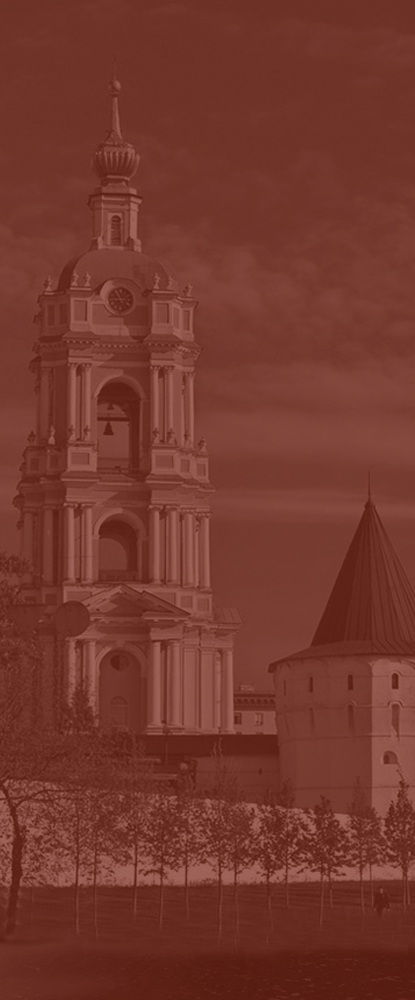
New Savior Monastery of Moscow 

29.01.2023. 

In the name of the Father, and of the Son, and of the Holy Spirit!

In today’s Sunday Gospel, we listened to a very moving story of a worthless man. He was both pitiful in appearance and in his status among the fellow countrymen, as he was a publican and bore the general judgment of people. Perhaps, in part of his worthlessness, he also bore a determination of his spirit.    

Many people of different stratum, positions and ranks, whom one could prefer, surround the Lord. But the Lord pays His attention to this very worthless man, preferring him to the others at this moment. He calls him by his name and says, “Zacchaeus, make haste and come down, for today I must stay at your house.”1  

There is a belief that on the Last Day many people will become surprised, as they will not find themselves at a place where they expected to be, and because they will see those, who they did not expect to, close to God. Many people will wonder and become disappointed. One thing is the judgment of people, quite the opposite is the judgment of God. The Lord always prefers a timid and humble man and says, “But on this one will I look: On him who is poor and of a contrite spirit.”2 

There is a phrase of the Holy Fathers, “I did not fast, I did not pray, I was not vigilant, I did not prostrate myself on the ground, but I humbled myself and the Lord saved me.”3 Everything I have listed is precious before God, but in this expression of the Holy Fathers, the priority of spiritual values is set.  Everything of this, prayer, fast, vigilance and asceticism, might be valuable and precious, if this is dissolved by humility. If there is no humility in any of these actions, these virtues might have a foul smell before God, because they will bring a proud opinion about oneself. 

“But on this one will I look: On him who is poor and of a contrite spirit.”2 The Lord prefers a humble person to a talented, great, and clever one. First of all, He pays His attention to him. 

I would like to emphasize some moments and differentiate between true spiritual humility and inferiority. These are two drastically different states. Humility always brings peace, timidity, love, and shyness, beautiful and kind shyness. While inferiority might bring jealousy, vanity, pride and hatred to the one who is more successful than you are or whom they prefer to you. 

These states are dramatically different in their effect and nature. Inferiority and humbleness, humility, are different states. God does not need the inferior ones. God needs and loves the humble, because they bring peace, mercifulness, timidity, and chasteness. These are the effects of a humble heart. God loves such people and seeks them. 

And not only God. Every one of us may feel the state of a person who communicates with us. It is always pleasant to deal with humble people. It feels peaceful, calm and secure with them. Our soul always seeks a humble, kind and timid friend. 

Humility may not necessarily be too educated, wise, beautiful and great. Humility is a mystery of one’s heart, by which we determine its effect coming in our direction and in the direction of the world. Humility cannot be played or performed, as it will be artificial, false and disgraceful. Humility is a natural state of one’s heart, which is born in the process of spiritual life. If a person leads a correct spiritual life, his or her heart will be raised in humility. If they strive correctly, they will surely be humble and come to a correct realization of themselves and their relationship with God. “Lord, I am nothing. You are Everything.” In this case, people will naturally have a state of love and gentleness, and even modesty, very beautiful and kind modesty.   

Venerable Elder Sophrony Sakharov tells the following story. When he lived on Athos, near the Agio Paul Monastery in a cave, and spent his time as a hermit in especially attentive prayer, he was a spiritual guide for many hermits of a Greek monastery. Because of his correct, attentive and reclusive spiritual life, his spiritual senses were very keen. He says, at that time, he met such Fathers on Holy Mount Athos, who walked in the Uncreated Light without suspecting this themselves. 

How could such a phenomenon be? You are in an outstanding spiritual state and you do not give esteem to your extraordinariness. He says, their life went so stably, gradually and smoothly that they did not come into this state with a jerk or hurriedly, but so smoothly that this state became natural for them. They did not see their extraordinariness. It seemed to them, this was a natural state of a human and everyone should be and live like this.   

A correct spiritual life presupposes smooth and gradual movement towards the Kingdom of Heaven. We do not jump or run, but we keep going stably. We do not stop and do not force the pace to stop again and catch our breath. It always happens like this. A person forces his pace first, then becomes out of his breath, and stops in order to recover his breath. This stop might be a little defeat. 

Go stably and straightly. In this case, your result will be reliable. The main thing is that in this straightness and stability, everything will come naturally to you. You will not have a self-opinion, considering yourself as something spiritually high. You will think that everyone lives like this and you do not amount too much. Then, on the Last Day we might become surprised when the Lord will call us from the furthest place and say, “My friend, leave your last place and come higher, I am asking you.” 


Glory to our God! Glory! Glory! Glory! Always, now and ever and unto the ages of ages. Amen! 

1 Lk. 19:5

2 Is. 66:2

3 St. John of the Ladder

DO NOT WASTE YOUR TIME

DO NOT WASTE YOUR TIME

St. John of Kronstadt Cathedral, Gai City, 31.12.2022


In the name of the Father, and of the Son, and of the Holy Spirit!

I congratulate you with the coming New Year. It is a very bright and cheerful feast in one’s childhood, while with aging, we become more reserved. Our emotions come down and we remain in a kind of medium state, as the Lord may grant to us. We realize we need to thank God for the past year, which He gave us to live through. There was something good and something bad in it.  We thank God for having, perhaps, one more year of our life, which we will not waste, but which we will use like a good servant multiplying our spiritual assets. 

One may live and constantly lose time. A day has passed and that’s it. The fact that time goes by is an unalterable law. The difference is that someone is gaining in the course of time and someone is always losing and does not redeem time. We are short of time. Someone multiples his or her earthly wealth. Well, at least this, at least they work on this. Some people do not even apply their efforts to gain earthly things. They simply lie on a couch in front of the TV criticizing all and everyone: the government, their friends, neighbors, and the city administration.   I could understand if they worked all day long. There are different cases. People come to confess and I hear different stories of life. It happens that a person is hard working; this poor man works and works, but the Lord gives him a very sorrowful life and nothing is getting on at all.  This happens not because he is lazy, but because it happens. However, there is another kind of grievers over their destiny, who do not do anything themselves and accuse every one of their sorrows. They keep complaining, and complaining, and complaining. I always want to tell them, “Get up and do something.”  

Once I was in hospital with an old man who told me, “I am a retired man and once in three days I go keep watch as a watchman. I earn three thousand. My young neighbor sits on a bench and laughs at me, “Uncle Alik, you are a stupid man, you work for only three thousand.” To which I say, “Sasha, and you sit from morning till night drunken and live off your mother’s pension. You even manage to drink off her pension. Bring her at least three thousand and make her happy.”” He also said, “The matter is not about the three thousand. The point is that God looks at me and sees that I am not lazy, that I work even being retired, as much as I can. I can go and buy some sweets for my grandchildren for these three thousand. All in all, it is good I am not a lazy man.” 

With the course of time, we do not celebrate holidays that recklessly. Especially New Year holidays. Children have less behind them and more ahead. They live in a state when their parents take all their sorrows, troubles, and problems upon themselves. Children simply wallow in their parent’s care. The whole life seems to be easy and careless to them. They do not even suppose what sorrows their parents go through to make their life easier. When people grow up they involuntarily immerse themselves into the problems of life. A year passed, and we do not only recollect what good things we had this year, but involuntarily we begin to recollect whom we lost this year, who is gone, and that we had not only happy, but sorrowful events in it. These are the prosaic details of everyday life. These are the facts of adult life. The more we live, the more we lose, and there remains less and less of time.  

A person begins to feel time, to sense it. Time becomes tight and tangible. For children it is blurry like a pink cloud. While adults perceive time as something tangible: it ends, it passes away, and it comprises much sorrow. Having sorrows in our life is law. A faithful person understands the point of sorrow. While an unbeliever cannot fathom the providence of God. This is why he becomes puzzled, protests, falls into despair, and quarrels with God. This quarrel causes him pain too.   This sorrow of quarrel with God adds to the sorrow, which already exists as a fact. He does not understand God and protests. Any protest brings sorrow and pain. Any quarrel brings sadness instead of happiness. Above all, a quarrel with God. At the same time, a faithful person comes into the vision of God, understands, and sees the providence of God everywhere.  Both in happiness and in sorrow he always sees the wise providence of God. Because of this, he feels no pain at all. His pain simply diminishes, as he understands its meaning. He bears it and he agrees to it.  

Happy New Coming Year to you! May God give you a long life, so you will be a good and obedient girl. Your life will be happy then.  If you grow up naughty, your life will be bad. But we believe you will be a good, kind, modest, and obedient girl. You will have many friends then and your main friend will be God. And I will turn green with friendly envy. 

Congratulations on the coming holiday! Sense time. Do not waste your time. How few people we have now… What is the population of Gai now? 38 thousand. How many people do we have here today? About 30? 38 thousand and 30 people. Look, the difference is drastic. So few people on the eve of the New Year, especially, on the eve of the year, which is not going to be calm, on the eve of the year, which takes all the pain and sorrow of the previous one: the fear of war and instability.  Those people who say, “I will not think about this” are insane. Well, you will not think about this, and this will pass by you? On the contrary, think. Think how you will live in this situation. Think. 

30 people and 38 thousand. Well, perhaps 30 more people have come to Father Vitalis too. But in relation to 38 thousand… this is a state of some… obnubilation. 

Congratulations on the coming holiday.

SERMON ON THE DAY OF NATIVITY 2023

SERMON ON THE DAY OF NATIVITY OF OUR LORD JESUS CHRIST

St. John of Kronstadt Cathedral, City of Gai, 07.01.2023


It happens that in our life, in our everyday life, there are not many holy things, or something lofty and inspiring, but everything is mundane, ordinary and common. While our souls yearn for something… such as some holy moments. This happens because, as Dostoevsky said, our soul is Christian by its nature. It needs these feelings. Sometimes it wants to raise itself a little above this mundanity; it wants something high-flown.   We try to do this in some earthly things: someone becomes fascinated by art, poetry, or falls for philosophy. However, a soul needs God. A soul does not simply need some high-flown thoughts. Thoughts are just thoughts. A soul needs the Person. 

Every nation on earth without exception, even if we take the most remote island with savage people into account, has an intuitive sense of God. This cannot be eradicated. The sense of God and yearning for God are present in every nation. Although, not every nation has knowledge of God, the knowledge of God as a Person. There can be many talks, speculations, wise and thick books about God, but they are only ABOUT Him. At a certain moment a person comes to a point where he or she says, “Well, that’s enough. I am fed up with the information about God. Show me Him Himself.”  

Many nations have the notion of One God Who is the Creator. They are the nations from the Bible: Hebrews, Muslims, and Christians. But very often this God is… somewhere far away. Too far away. 

Once I visited Jerusalem. My guide was a Jewish man. Considering that I am a priest and he is an orthodox Jew, we had spiritual talks. He told me, “You know, we take God in the following way: He is everywhere.” I said, “Yes, everywhere, and He seems to be nowhere.” This “everywhere” blurs God so much that He cannot become God or a Person at all. He cannot become a Person Whom we can look in the eye, ask a question, and receive an answer. 

People who seek God throughout the major part of their lives often prove to become unsatisfied with mere information about God. They begin to long for Him. In the Old Testament, God was mostly the One Who was very far away. People longed for God Whom they could take as a Friend, a Father, and a Person. Answering for this longing and search of such a relationship, God humbles Himself and reaches out to people so much that comes into a human flesh. This meeting does not take place somewhere up there, but it happens right here inside of us. God ceases to be the God “before” us and becomes the God “inside” of us.  

The Old Testament righteous people knew such a notion as walking before God. There are the following words there, “Abraham was righteous and walked before God. Isaac was righteous and walked before God.” This walking before God, the feeling of having Him watch them, made them be righteous. They found themselves before the eyes of God all the time and thus regulated their behavior. In the New Testament, things changed drastically and the God “before” us and became the God “inside” of us. He became a man inside of human flesh. 

There is a notion of the Holy Fathers called “deification.” This is a union of two natures, a Divine and a human, into one.  The first miracle of it happened in the Body of Christ. The Church teaches, He is the Perfect God and the Perfect Man. But this did not stop in Him. He made it possible for all of us. This happened to saints. Saints are not simply great righteous and wise people. Every human has his or her limits.  Saints are those people who unite with God. God became their God “inside” of them and enlightened them. Saints do not shine by themselves and draw glory above themselves. The Glory of God reveals itself through them.  

This is how close the Lord came to us and this happened on this very night of His Birth. The first miracle of union of flesh and Divinity worked in this little Baby Who laid in the crib. Then it took place first in those who desired it and second in those who made great effort to attain it.  As our desire is one thing, but we need to apply effort to reach it.  

It became possible for everyone to repeat this miracle of deification. This is when God is not before you, but inside of you. 

Our church is dedicated to St. John of Kronstadt. This miracle took place in him too. All of a sudden, a simple man born from an earthly mother came to live a supernatural life, do supernatural things, and say wise words, which did not come from him. 

God approached a human this much on this night. For Him this was humbling and even humiliation of Himself in a sense. God is the Creator of the Universe Who cannot be limited by anything. Any limit will humiliate Him. However, He voluntarily goes for this limitation for our sake, for the sake of love for us. This is the kind of holy and festive night we have today. 

I wish you to bring home these enigmatic thoughts and feelings after this service. Walk down the street and keep silent, enter this Mystery and bring it with you. If someone in your family stayed at home, come to them gently, kiss and say, “Christ is born!” Let them feel this is not a madness of a sleepy man, who has come from the service, but a particle of his happiness.  

Happy Nativity to you, dear! Have a blessed Feast!

ON SPIRITUAL WARFARE

ON SPIRITUAL WARFARE. 

Sermon after the Liturgy on the night of the New Year 01.01.2023


In the name of the Father, and of the Son, and of the Holy Spirit!

I cannot be excited about the holiday that recklessly began tonight. When the fireworks began to go off, I thought at first we were people who are far away from the war. We feel good when we hear them. Oh, it is midnight already, here are the fireworks, we are having a holiday, and we are celebrating the New Year. We have subtle, deep, festive feelings inside. Meanwhile there are people who are close to the war. They must think at once, “grenade launchers are at work. It is an attack.” Artillery is louder, it makes windows crack. And this, this resembles… Look, how differently we feel.  We are so far away. We have not experienced it yet because we are far away. At the same time, this is an issue for everyone. There are secular people who are standing here. Some of them may have children or husbands there; somebody might have lost someone.  Someone has not dealt with it yet. To them, life seems to be a roulette. It might not happen to me. But it turns and it happens to you today. 

It seems, there is war, and one could have thought about this before. But don’t you think there was no war before the war? Don’t you think there was no spiritual war? Spiritual war goes on all the time. Why doesn’t it concern us? Because we capitulated. We surrendered and made an agreement with another party. We will bow to you, drop on our knees when it is needed, and say and do what is needed. Just do not kill and torture us, we are ready to yield ourselves prisoners. 

I am talking about a war before the war, about an inner, spiritual war. Just try and declare spiritual war on yourself, the world, satan with his troops, just try. Such a war will begin at once! Your friends, close people, relatives, and even those people you have never expected will be on the war-path. I tell you. Even those you have never expected to. And you yourself will be in this war against your habits and egotism. I want this and I don’t want that. Such a war will begin and how! Such bombs will hit simply to death.   

Why does it seem to people who live in times when there is no external war, that these times are peaceful? This is because they live in captivity at that moment. They surrendered and agreed to the conditions. But if you do not agree to these spiritual conditions of slavery, being a captive of satan, you will always have a war. And you will always have the remembrance of death, because you will always have an internal and external war. 

It is very sad to hear when Christians say, “You should not go deep into spiritual life, otherwise, you’ll have temptations.” What does it mean? You better capitulate, agree, and live quietly. Make a deal. This is the sense of these words, when Christians say, “Do not say the Jesus prayer, or else you will have temptations. Do not pronounce the Name of God at any cost, or temptations will come.” Well, you will not have temptations if you bow and scrape before the other side and say, “I will do what you will tell me to do.” In this case, you will not have any temptations, except for a constant humiliation. But if you will finally find some strength to say “no,” you will have temptations and a big and terrible war will begin, to the last drop of your blood. 

You will have both external and internal temptations. Your children will be sick, your closest friends will betray you, people will slander and chase you, and everything inside of you will burst, as there will be inner war. If only you allow yourself to declare this war. Not just declare, but simply say “no.” You will simply say “no, I will not do this anymore” addressing yourself to satan.  “Well, you will not! Then I will change my note. As long as you agreed to be my slave and to my conditions, I threw you a crust of bread and gave you a glass of water every day. I even let you stay on a heap of straw in that warm corner. But you said “no” and I’ll change my attitude.” 

The major part of humankind lives in consent to this slavery. Lest we have no troubles and temptations, we agree to anything. However, there has always been a part of humankind, a small part of heroes. They are the heroes who allowed themselves to say “no” for Christ’s sake, for the sake of truth, conscience, their neighbors, and love. For them the New Year fireworks become an artillery attack.  

Some people hear them now and have some good associations from their childhood with these fireworks. Meanwhile those children, who live there, people who live there, the soldiers who are there, involuntarily huddle up and make themselves as small as possible on hearing this. 

We should enjoy this life, but not as carelessly as we can. We should remember that we are far away from God due to our fall and we need to apply a great effort to come back to Him. It will be hard and painful. It will be unbearably hard. But there is no other way.  “The Kingdom of Heaven suffers violence, and the violent take it by force.”1

So, I cannot say with a broad smile “Happy New Year to you.” Glory to God, the New Year has come. Falling into despair is the other extreme. And rejoicing too much at this moment is insane too. I think we should do everything moderately now. 

Glory to our God now and ever, and onto the ages of ages. Amen!

1 Mt. 11:12

ABOUT YEARNING FOR GOD

ABOUT YEARNING FOR GOD

St. John of Kronstadt Cathedral, Gai City, 31.12.2022


People have always worried that God is somewhere far far away from them. We threw back our heads, and God seemed to be so far, that sometimes, we got the desire to approach Him, even a little bit.  You might remember among the multitude of altars in the Areopagus in Athens, there was one dedicated to the Heavenly God. Even pagans somehow perceived with their “sixth sense” that that was the God, the Only and Main One, Whom they could not fathom. This yearning for approaching God made them create an idol. An idol was easier to understand. You can stand near him, touch him, and venerate him. While that God, Who was somewhat unfamiliar and far away, did not always satisfy that thirst for being together with Him. 

In a few moments, a special part of the Liturgy will begin. We have just announced the Ecteniae, “Catechumens, depart.” Who are the “catechumens?” In ancient times, those people, who were not yet the members of the Church and who were not yet baptized, had to undergo the period of catechesis. This is not because the Church disregarded them or treated them as some kind of sub-humans or sub-Christians, but because the Church wisely gave them this thirst for approaching God, so they wanted to be closer to Him. The Church saw this and created this pause and distance on purpose, so a person could yearn and had a burning desire to approach God a little at last. After the Sacrament of Baptism they became members of the Church. 


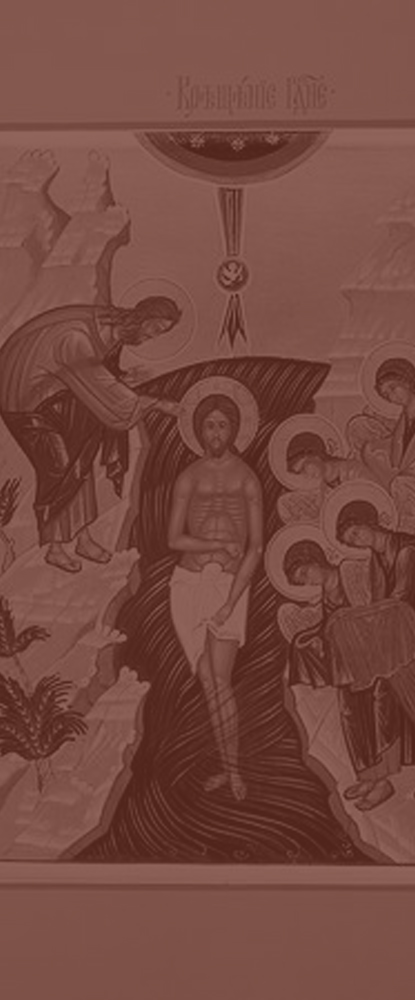
SERMON ON THE DAY OF THEOPHANY

SERMON ON THE DAY OF THEOPHANY

St. John of Kronstadt Cathedral, Gai City, 19.01.2023


In the name of the Father, and of the Son, and of the Holy Spirit!

The Lord says in the Gospel that those who believe in Him will have rivers of living water flowing out of their hearts.1 He says, “I am the truth and the life.”2  In the Gospel and in the Church people talk more about life, but I would like to ask you a question now. We have a little bunch of people here, who are not sleeping, and the whole city, which is sleeping. What is the difference? Or this bunch of people will not suffer from diseases, have misfortunes in their lives and die? They will have all this all the same. 

Once a man told me, “Father, I am an unbeliever, but I have lived happily all my life long. I have a wonderful family, good work and everyone there respects me. Glory to God, the Lord gave me good health and well-being.”  Being a common human, he sincerely does not understand why he should not sleep tonight, for example. Some people will need to go to work tomorrow, as it is a working week. While this is a relative feat and a limitation of oneself.    

What is this all for, if we see that those people, who do not go to church and do not remember about God, live as happily as churched people in earthly terms. Sometimes their life is even more calm and stable. This is why the question rises, “What life does the Lord talk about when He says ‘I am the truth and the life. I give life?’”  

Churched people who do not get the meaning of these words wonder, “The day before yesterday we buried an unbeliever, today we bury a faithful person. It’s all the same.” There are more unbelievers than believers among the patients of the hospital, which is just across the road from us. Faithful people are its patients too and they suffer from different diseases as well. What life does the Lord talk about? Even we, churched people, do not always understand what He speaks about. The Lord speaks about spiritual life.    

There is a simple physiological life. Animals live physiologically. One may say, this kind of life is full, but on the other hand, it is only a part of life. This is because animals are deprived of something, which a human has. They live only in the format of physiology, but are deprived of something belonging to the soul. Animals take no interest in music, they do not understand poetry, and they will never stop in admiration before a painting of Aivazovsky, as they simply do not see it. This is because they live only in the format of physiology.  And they live happily in it. A calf comes to this world, he grows, runs on grass, grows more into a huge bull. And that’s it. People live more widely and deeper. They live in the format of physiology too, but they also live in the format of soul.  People are capable of listening to music; they may write music, can communicate their thoughts and enjoy sunsets. There is something more deep in people than a simple physiological existence. However, the format of soul is still a limited format.  

You know, I am an iconographer. I paint icons and have some success in it. I wrote books, painted icons, and filmed movies. Some pieces of my art found recognition at some festivals. As an iconographer, I was trusted to paint frescoes at churches on Holy Mount Athos in Greece. It would seem one could be happy about all this. Believe me, today you receive the Nobel prize, but in a week you cool down and everything becomes common and usual as it used to. Yes, you have it. Today you jump with joy, call everybody, receive calls and congratulations, and in a week there is nothing. 

A human can live not only in the format of soul. Our soulfulness will die together with us. You will simply die a good person or a person, who wrote poems or music. People might listen to it after your death, but for you this will be the end. People, and particularly nowadays, very few people, can live another kind of life. They can have not only physiological and soulful life, but they also have an ability to come into spiritual life. But, unfortunately, I repeat, these people are very few now. For those people who have never entered this spiritual format of life, it seems to never exist. They  cannot fathom how the Venerable Seraphim of Sarov lived, what feelings he had, what visions and thoughts he experienced. Because for us this is beyond comprehension. We simply live physiologically and soulfully. Spiritual world is closed to us. 

When the Lord speaks about life, He doesn’t speak about physiological life, as even Holy Father Seraphim of Sarov suffered from diseases and died. When the Lord speaks about life, He does not speak about soulful life, or a life filled with creativity, philosophy and something high-flown. The Lord speaks about spiritual life, for which many of us are simply dead. It does not exist and it is like a parallel world for us. However, some people, and the Lord calls them “little flock,”3 entered that world. The Lord says, “there will be a few of you,” and those rare people, who were few in their number, entered this world and began to understand there was something and that this world existed simultaneously. It exists to its own laws, it is real and very objective. And you are vegetating here, underneath it. Some people become inflamed with the desire to fathom this world, enter it and become a part of its laws and existence. And they succeeded in this. 

You didn’t need something  to sleep and to come tonight forming this little bunch of people. You may not have a certain ability to experience this spiritual world yet, but you have a sense of it. This sense made you come. You feel there is something more high than eating, drinking, listening to music or looking at something beautiful. Churched people feel there is something more high. Even in the format of a church. Our church is decorated very beautifully. There are beautiful ancient churches with a marvelous interior, but this is not primary, this is not the main thing, this is secondary. You may find yourself in an old dilapidated church and feel you are in the Tsar’s Chambers. Holy Father Seraphim was in a wild forest, in a very poor cell, but felt like he was in the Tsar’s Chambers.  

We will take the holy water now. For some people this does not mean anything, but for some this is today’s real miracle. 

The day before yesterday we inspected these holy water tanks. No one washed them for two years and we were very worried that everything began to foul during this period and we would need to cleanse and wash everything thoroughly.  When I removed the lid, I saw clean and fresh water in the bottom of the vessel. There was no smell or decay inside. This happens every year on the nineteenth. Nevertheless, this touches only a small part of the population. Some people take this event indifferently.  Every Great Saturday on the eve of Pascha, in Jerusalem, the Holy Fire comes down. There are thousands of witnesses. But for some people this means nothing. Some people will not even cross their forehead on Pascha, even Russian, baptized people. However, for certain people, this is a miracle. 

Today we have a little miracle, we bless water, and, as it is said in the liturgical text, “today the essence is changing.” Something happens to water. What? Something unfathomable for us. No physicist or chemist will tell you what is happening there. But for a faithful person the explanation is very simple: the Grace of the Holy Spirit touches water and changes its spiritual nature, but not a physical one. A little miracle takes place. Now someone will receive the Eucharist and a little miracle may happen to them. Inside of them, when they receive the Body and the Blood of Christ, it may happen.  I say this for faithful people who always take Communion. We often take Communion traditionally, by habit. But real Communion happens very seldom.  

Have a blessed feast! Happy Holy Theophany to you!

1 Jn. 7:38

2 Jn. 14:6

3 Lk. 12:32

ABOUT TRANSFIGURATION

ABOUT TRANSFIGURATION

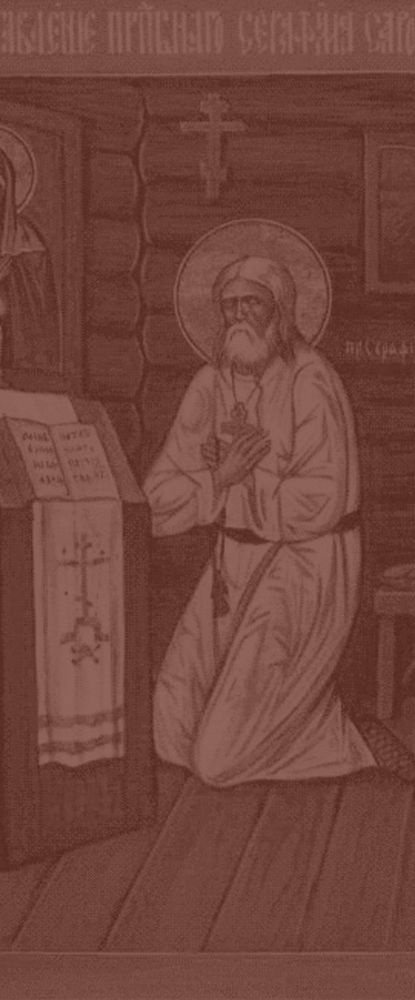
Sermon on the Day of the Venerable Saint Seraphim of Sarov.  15.01.2023


In the name of the Father, and of the Son, and of the Holy Spirit!

There is a moment in the Gospel where the Lord says, “Assuredly, assuredly I say to you, there are some standing here who shall not see death till they see the Kingdom of God present with power.”1 Many Christians, unfortunately, even Christians, did not understand the words of the Savior and thought that the Second Coming of Christ would be in the first century, while the Apostles were still alive. But the first century passed, and then the second, the tenth, the twentieth centuries passed as well, and those people who do not understand the words of Christ still wonder. Right after these words, “Assuredly, I say to you that there are some standing here who will see the Kingdom of God even now”1 Christ takes the Apostles, who were the closest to Him, ascends Mount Tabor with them and transfigures before them. As the Gospel says, they see the Glory of God and the Uncreated Divine Light. The first words of St. Peter the Apostle, which precisely described that moment, were, “Lord, it is good for us to be here.”2 

When a person comes into the Glory of God, into this miracle of the Uncreated Light, when he or she is shrouded with the Grace, the first and the most precise thing (as the rest happens later and is secondary) he or she says, “It is good for me to be here.” The Apostles were not the only people who saw the Kingdom of Heaven present with power in this age. After them there were thousands of saints in the first, fourth, and tenth century. In the tenth century, St. Symeon the New Theologian, an outstanding person, all of a sudden, said the following, “If you have not met Christ in this life, then everything in your future life is in doubt.” If there were no miracle of your personal transfiguration in this life, then everything will be very unstable in your future life. 

First century, fourth century, tenth century, St. Symeon the New Theologian. Thirteenth century, St. Gregory Palamas. And finally, very-very close to us, the Venerable St. Father Seraphim. He entered the Grace of God to such an extent as the Apostles did on Holy Mount Tabor. Although, one might wonder, he lived in the nineteenth century! Nineteen centuries separate him from the events, which took place on Mount Tabor. And suddenly, he repeats the state of the Apostles almost to the full extent. He does not keep this for himself, as his personal secret, but shares this through his close novice Motovilov; through him, he shared this to us.  In a snowy forest, he takes Motovilov by his hands and the miracle of transfiguration works. Everything becomes enlightened with this Uncreated Light. When Father Seraphim asked Motovilov, “What do you feel?” There were different words, “warmth and light,” but the main point was the same, “Father, I feel so good here. I wish I could stay here forever.” Just as St. Peter the Apostle says in his childish naivety, “Lord, it is good for us to be here; and let us make three tabernacles: one for You, one for Moses, and one for Elijah2 and we can sit outside and be happy.” This is his involuntarily childish exclamation.   

Every one of us hears the appeal of the Lord to cleanse ourselves, as the Lord says, “Anything that defiles shall not enter the Kingdom of Heaven.”3 This is why He says, “Do you want to enter? Then cleanse yourself.” Every one of us, on hearing this appeal, becomes sincerely inflamed with the desire, “I want, Lord!” and tries to cleanse himself, but comes to a dead end. Nothing works. If we succeed in accomplishing some external efforts and observing some external things, we cannot do anything about our inner world. At this moment, all Christians come to a point of desperation and say, “Lord, You see, I want to do this sincerely, but nothing works.” They start to struggle with this internal shame and always remain defeated; they cannot overcome this at all.  

I would like to tell you one important thing. At least, from my experience this is the main notion, without which no one can cleanse himself. The most exact definition of Christ is Christ the Sweetest. When Christ becomes the Sweetest for you, not just Sweet, but the Sweetest, when His sweetness becomes bigger than any earthly sweetness, than the taste of any delicious food we overeat, than the taste of lust we revel  in, than the taste of vanity, which soothes us and turns our heads; nothing affects people like vanity does. So, only if Jesus becomes sweeter than anything else, He will win and prevail inside of us. He should become real and the Sweetest for us. This is why all those Christians who simply fight and contradict sin may attain something, but will never do it to the full extent. At least, I can sincerely say so about myself. Until we realize that all our efforts should be directed not only at a struggle with sin, but all our force and attention should be directed at seeking Christ and reuniting with Him. Having reunited with Him, we begin to feel He is really the Sweetest. And His sweetness intercepts all earthly sweetness. Everything earthly becomes bitter in comparison to the sweetness of the Sweetest Jesus. This is the only way to overcome sin. Christ should become the Sweetest for us. Everything else, everything earthly, all our passions may simply remain sweet. But Christ should be the Sweetest.  

This happened with Holy Father Seraphim of Sarov. He did not beat sin by himself, but he fathomed Christ, learned how sweet He was, and everything earthly became tasteless and even bitter for him. 

Venerable Father Seraphim, pray to God for us! Sweetest Jesus, do not leave us! Mother Theotokos, save us!

Have a blessed Feast!

Having touched Christ, Father Seraphim became sweet, as he touched Him. He became very-very-very sweet.

1 “Assuredly, I say to you that there are some standing here who will not taste death till they see the kingdom of God present with power.” (Mk. 9:1)

“Assuredly, I say to you, there are some standing here who shall not taste death till they see the Son of Man coming in His kingdom.” (Mt. 16:28)

2 “Rabbi, it is good for us to be here; and let us make three tabernacles: one for You, one for Moses, and one for Elijah.” (Mk. 9:5)

3 “But there shall by no means enter it anything that defiles.” (Apoc. 21:27)